
AI Agent Reliability: Why Decentralized Agents Beat One Big Model
At ALIGN New York City 2026, InsightFinder AI's Helen Gu explained why agents built on one or two foundation models are fragile, costly and risky, and made the case for decentralized multi-agent systems with real-time evaluation and monitoring.
By The AI Enterprise Magazine Team3 min read
Key takeaways
- Model dependency is a single point of failure. When a foundation model provider has an outage, agents built on it fail too.
- Models answer even when wrong. Gu said statistical models rarely admit uncertainty, especially with numbers.
- Go decentralized. Multi-agent systems built around workflows are easier to debug and can use small, cheaper models.
- Monitor more than infrastructure. Track models, prompts, responses, input data and token use.
- Automate evaluation. Real-time evaluation and step-by-step tracing replace human review at scale.
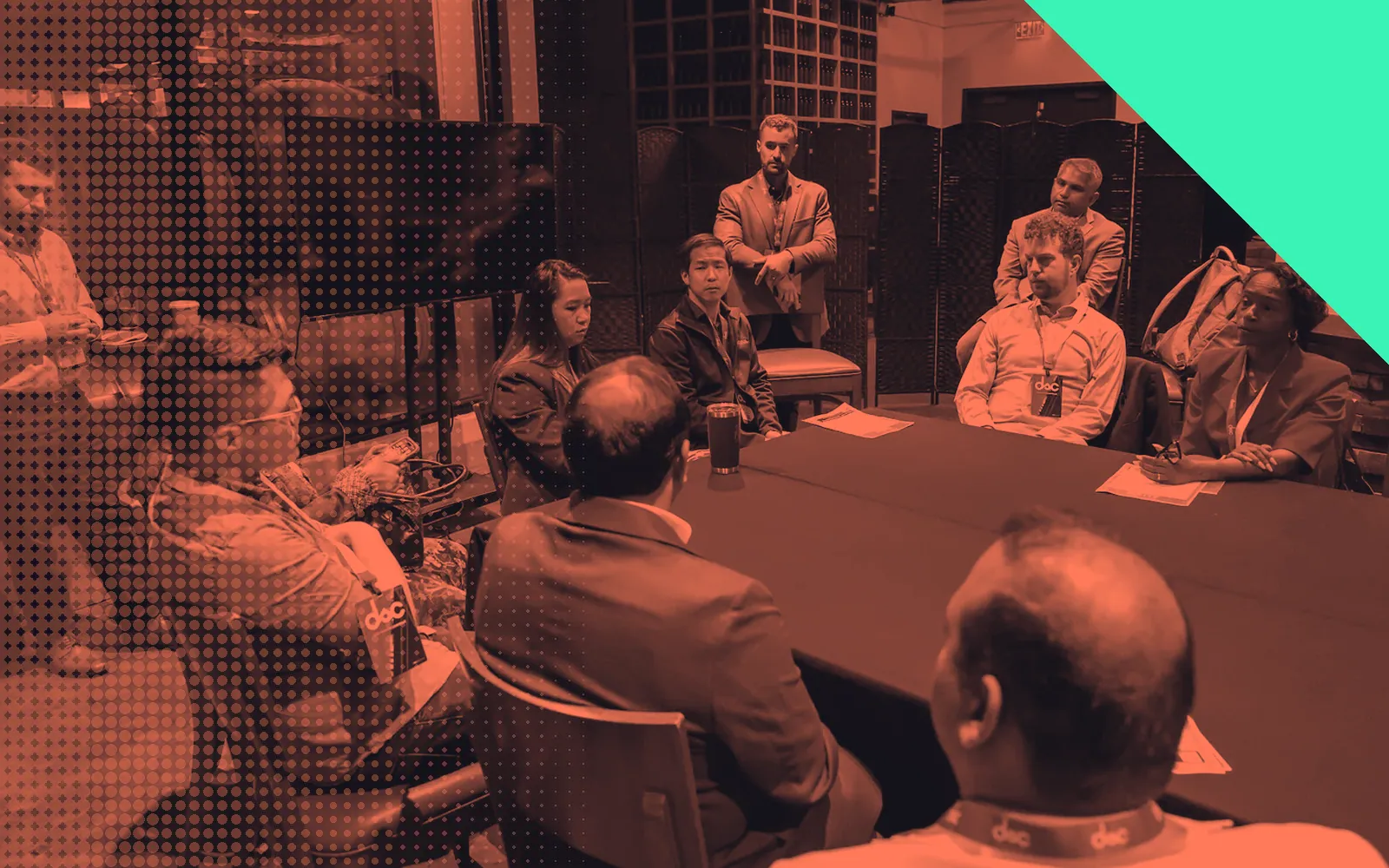
Building an AI agent is the easy part. Keeping it reliable in production is where companies struggle, according to Helen Gu, CEO and Founder of InsightFinder AI. At the ALIGN AI Executive Summit New York City 2026 on June 25, in a session sponsored by InsightFinder AI titled From Model Dependency to AI Reliability, Gu explained why agents are fragile and why she favors a decentralized approach.
Why are AI agents fragile in production?
Coding agents are producing large amounts of code that reaches production without thorough testing, Gu said, and that code doesn't understand a company's business context. Most monitoring tools were built for traditional IT systems, so they also lack that context and offer limited help when something breaks. "The reliability of the AI system soon become the bottleneck," she said.
She described four risks:
- Dependence on a few foundation models. Most companies build agents on one or a few large models. When a provider has an outage, the business goes down with it.
- Confident wrong answers. Models are statistical and rarely say they don't know. Gu said that when she once asked ChatGPT whether 13.11 or 13.8 is larger, it chose 13.11. Language models trained on text struggle with numbers, she said, and people who aren't experts may not catch the mistake.
- Cost and limits. Relying on one large model means high token bills and usage caps that can stop engineers and scientists from working.
- A bigger attack surface. Agents can touch far more information than traditional IT services, so without guardrails they can expose sensitive data or corrupt business processes.
What is a decentralized approach to AI agents?
Instead of one monolithic agent on a single foundation model, Gu recommends multi-agent systems built around specific workflows. Problems are easier to localize and fix, and simple agents can run on small language models instead of expensive frontier models. Smaller agents are also easier to customize and put guardrails around.
InsightFinder used this approach to build its AI site reliability engineering agent, which connects to IT service management and observability tools to help on-call engineers fix problems in real time. Because it doesn't depend on foundation models, the company can offer that agent for free, she said.
What should you monitor for AI agents?
Traditional monitoring covers infrastructure and application performance. Agents need more, Gu said: monitoring of the models, the prompts and responses, the data going into the models and the infrastructure running them, with anomaly detection across all of it.
Organizations also need automated, real-time evaluation, because they can't double their workforce to review everything agents produce. When an error happens, step-by-step tracing should show which agent and which prompt caused it. Token consumption and model performance should be tracked before a large bill arrives.
Why compare this moment to the mainframe era?
Gu compared reliance on a few foundation models to the mainframe era: powerful and expensive, but limited to a few users. Computing took off when personal computers put the technology in everyone's hands. She sees a similar inflection point for AI, where decentralized agents give businesses more reliable and cost-effective systems that keep running even if a model provider goes down or retires a model.
Where to hear more in 2027
Agent reliability and observability will be on the agenda at the 2027 ALIGN AI Executive Summits, invitation-only gatherings for data and AI executives in eight U.S. cities. Registration is coming soon. Details are on the ALIGN AI Executive Summits page.
Frequently asked questions
Why do AI agents fail in production?
Gu cited dependence on a few foundation models, confident wrong answers, high cost and usage limits, and a larger attack surface.
What is a decentralized approach to AI agents?
Building multiple smaller agents around specific workflows, using small language models where possible, instead of one large agent on a single foundation model.
What should AI agent monitoring include?
Models, prompts and responses, input data and infrastructure, with anomaly detection, real-time evaluation, tracing and token tracking.
This article is based on remarks by Helen Gu, CEO/Founder, InsightFinder AI at ALIGN AI Executive Summit New York City 2026 on June 25, 2026. More coverage: ALIGN AI Executive Summits.
Filed under: Observability & Data Quality, Agentic AI, AI Strategy & ROI