AI Agents in the Enterprise: Where They Work and How to Govern Them
Leaders from BlackRock, Dollar General and ManTech explain what it takes to run AI agents in production: bounded use cases, engineering discipline, governance and cost visibility.
By The AI Enterprise Magazine Team4 min read
Key takeaways
- Treat agents like software. Pilcher said enterprise agents need a full development lifecycle, guardrails and a multidisciplinary team.
- Stage use cases by risk. BlackRock starts with question answering, then diagnostics, then job re-runs, and is holding off on direct data changes.
- Design memory up front. Dey separates episodic, semantic and procedural memory and keeps it queryable for audits.
- Watch behavior, not just systems. Agent observability tracks missed goals, failed tool calls and token cost per execution.
- Start with an owner and a dollar value. Panelists said agents should tie to a business outcome that secures next year's funding.
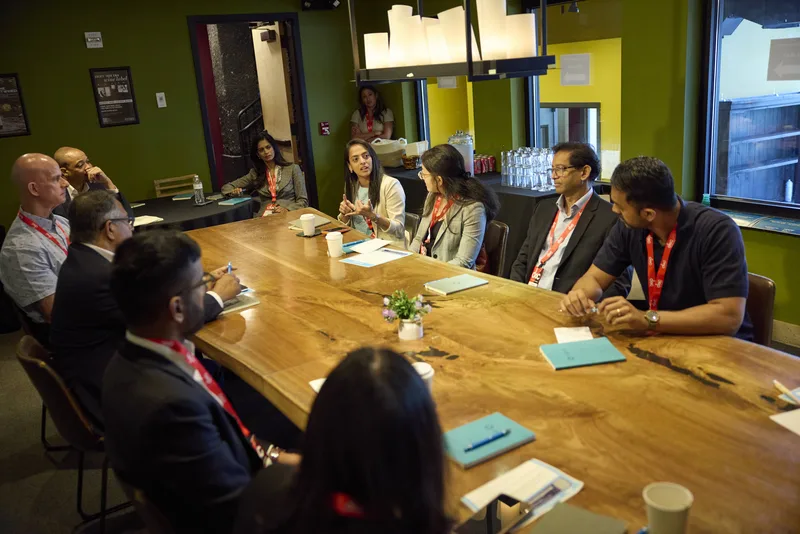
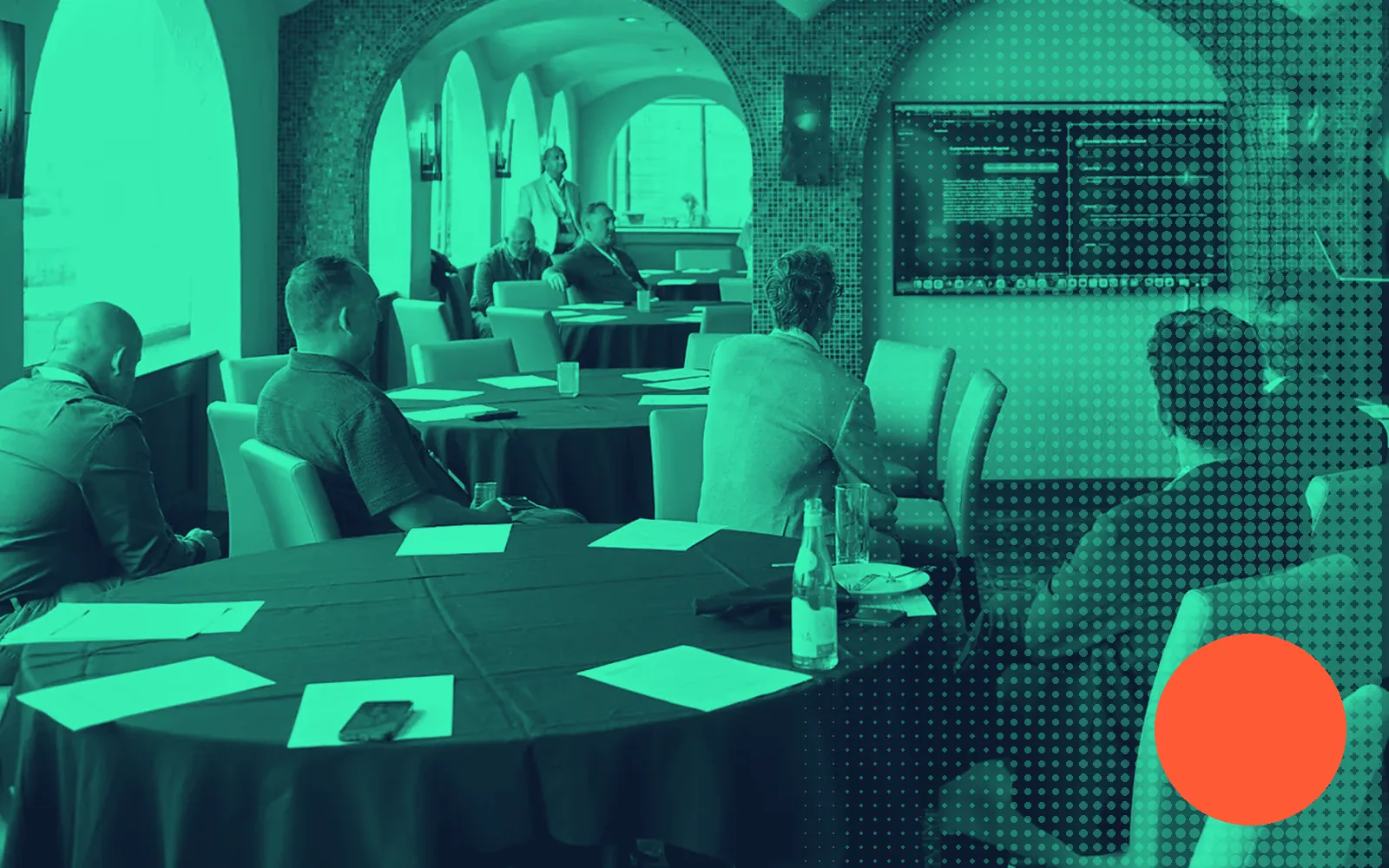
Enterprise AI agents earn their place by solving a business problem someone will pay for, not by impressing in a demo. That was the shared view of a panel at the ALIGN AI Executive Summit Atlanta 2026 on May 20, in a session sponsored by Elder Research.
Felipe Archilla, Director, Product Delivery, Data & Analytics at Coca-Cola, moderated Agents in the Enterprise: Hype, Reality, and Risk. The panelists were Gerhard Pilcher, Vice President of Growth, Data and AI Practice at Elder Research; Sachin More, Director of Application Engineering at Dollar General; and Srijani Dey, Senior Director, Data Strategic Programs at BlackRock.
What makes an AI agent enterprise grade?
Pilcher compared enterprise agents to software. A real agent needs a development lifecycle, validation and cost optimization, advanced models with guardrails, and usually a system of agents rather than one. "We don't deploy a lot of software here that was written by a citizen software developer," he said, so agents need the same rigor and a multidisciplinary team.
More drew the line between workflows, copilots and agents. Workflows follow predefined steps and copilots help people with daily tasks, while agents can act on instructions with some judgment. That makes clear instructions and a tightly defined scope essential, he said.
Dey said the agents scaling in production at BlackRock are goal oriented and designed for memory from the start. Her team is building a control plane for multi-agent and multi-system orchestration, because application boundaries limit what a single agent can do. She is also building a verification and validation framework that checks policies and rules, not just model accuracy.
Where are AI agents delivering value today?
Dey described a staged approach. BlackRock starts with tasks that need no action, such as answering questions from more than 200 clients about how net asset value or spreads are calculated, using existing documentation. The next level involves checking a client's environment when a data job fails. The third re-runs jobs, such as after a price change, where a holdings snapshot keeps the process traceable. Tasks that change data directly are off the table for now. "That is where we are being very careful," she said.
More is starting with offline work at Dollar General: flagging anomalies in forecasts for a person to review, and agents that take on personas such as a product owner or QA engineer in the software lifecycle. Database updates are "in the parking lot" for later, he said.
Pilcher gave a consumer brand example. A single brand can generate about 75,000 data points a week from syndicated and internal data. Layering metrics, anomaly detection and a guardrailed agent lets a brand manager ask questions and get suggestions. "This is really the transformational part of AI," he said.
How should enterprises design agent memory?
Dey outlined the memory types BlackRock designs for. Episodic memory records what decision an agent made and why, semantic memory captures the reasoning and whether it drifted, and procedural memory holds policies. That history must be queryable for audits, with role-based access controls because it contains sensitive data.
More compared memory to driving for Uber: the driver shouldn't have to maintain the car. Memory management should be a system problem, he said, using familiar primary and secondary memory concepts.
Pilcher thinks the topic is "a little bit overhyped." Inside a company, he said, memory is an engineering problem about keeping data within the firewall and within existing permissions.
What does agent observability look like in production?
"We need to follow the agent's mind," Dey said. Traditional observability tracks CPU spikes and failures, but agents need behavioral telemetry: how often an agent missed its goal, failed to retrieve memory or hit a tool it couldn't reach. Token costs for every execution belong in that telemetry too, she said, so infrastructure teams can plan GPU spending.
More said the test is whether a team can explain what an agent changed and why. Without that, he said, "the business is not going to trust us." Pilcher added that people often hold AI to a higher standard than they hold humans.
How do you govern agents without stopping innovation?
"Governance should enable innovation, not stifle it," Pilcher said. He suggested letting people experiment, monitoring compute in the background, and building a community around shared prompts to spot which ideas should become enterprise agents.
On moving to production, Dey told her teams to show value iteratively and to "design for the failures," not only the happy path. More said prototypes that work on a laptop often stall at enterprise scale, so teams should test early in a production-scale cloud environment. Pilcher has dropped the words prototype and proof of concept: anything his company builds must be deployable from the start.
Asked for one piece of advice, Pilcher asked whether a business owner will put a dollar value on an agent. More recommended starting with high-volume use cases. Dey said to build for a business outcome, because "you need funding for next year."
ALIGN returns to Atlanta in 2027
The ALIGN AI Executive Summits are invitation-only gatherings for data and AI executives. In 2027 the series visits eight U.S. cities: Atlanta, New York City, Dallas, Chicago, San Francisco, Boston, DC and Los Angeles. Registration is coming soon. See the ALIGN AI Executive Summits page for details.
Frequently asked questions
What makes an AI agent enterprise grade?
Panelists pointed to a software development lifecycle, validation, guardrails, cost optimization, and usually a system of agents built by a multidisciplinary team.
Where should enterprises start with AI agents?
BlackRock's Srijani Dey said to start with tasks that need no action, such as answering client questions from documentation, before moving to tasks that change data.
How should AI agent memory be designed?
Dey described episodic memory for decisions, semantic memory for reasoning and drift, and procedural memory for policies, all queryable and access controlled.
What should AI agent observability measure?
Behavioral signals such as how often an agent missed its goal, failed to retrieve memory or could not reach a tool, plus token cost per execution.
This article is based on remarks by Felipe Archilla, Director, Product Delivery - Data & Analytics, Coca-Cola (moderator); Gerhard Pilcher, Vice President of Growth, Data and AI Practice, Elder Research; Sachin More, Director of Application Engineering, Dollar General; Srijani Dey, Senior Director - Data Strategic Programs, BlackRock at ALIGN AI Executive Summit Atlanta 2026 on May 20, 2026. More coverage: ALIGN AI Executive Summits.
Filed under: Agentic AI, AI Governance & Trust, AI Strategy & ROI