Context Engineering in the Enterprise: RAG, MCP and Who Owns the Data
At ALIGN New York City 2026, leaders from DLA Piper, The Fitch Group, Omnicom and Teradata explained why context, not model power, decides whether enterprise AI works, and compared notes on RAG pipelines, knowledge graphs, MCP and data ownership.
By The AI Enterprise Magazine Team4 min read

Key takeaways
- Context decides outcomes. Fragmented data and inconsistent KPIs break enterprise AI more often than weak models.
- Rerank by intent. Fitch classifies the question's intent before reranking retrieved documents and always returns citations.
- Hybrid systems add proof. DLA Piper combines LLMs with knowledge graphs to extract 50 facts from a complaint at 99% accuracy.
- MCP splits opinion. Omnicom uses it to connect systems; DLA Piper says it can't yet handle legal access controls.
- Data ownership is the next fight. Clients are restricting how firms use their data with AI.
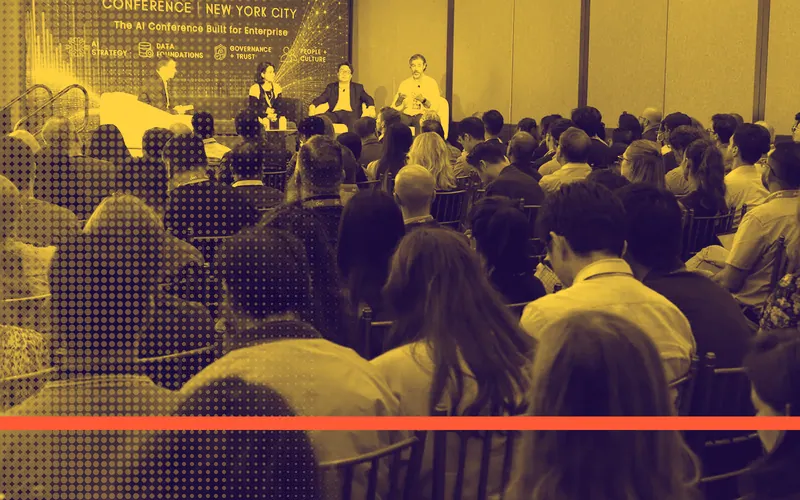
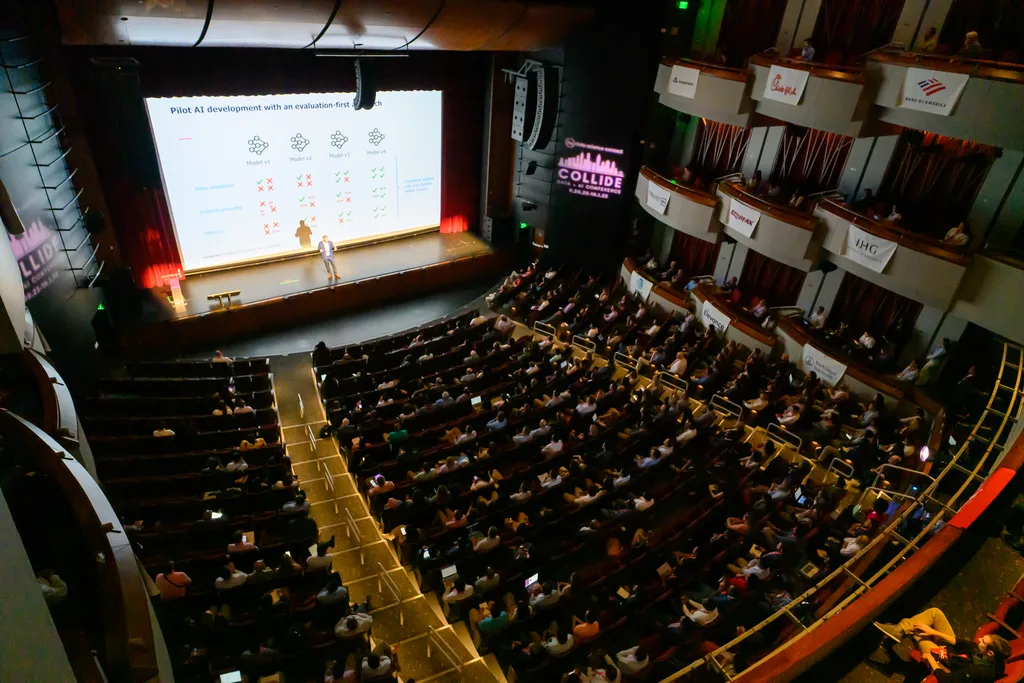
Enterprise AI rarely fails because the model is too weak. It fails because the model lacks the right context. That idea framed a panel at the ALIGN AI Executive Summit New York City 2026 on June 25, in a session sponsored by Teradata.
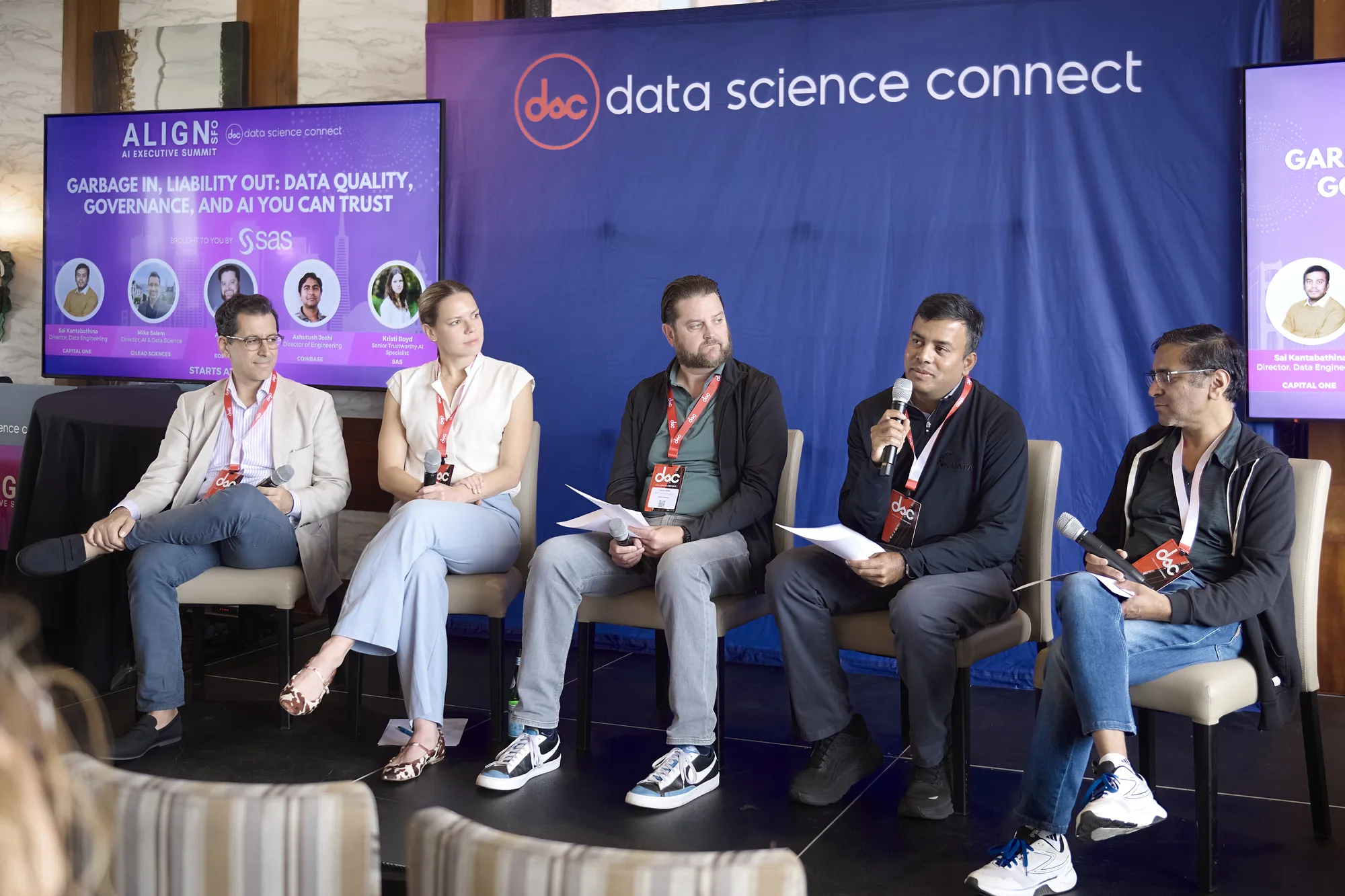
Bob Fintel, VP Technology, Americas at Teradata, moderated Context Engineering in the Enterprise: RAG, MCP, and Making AI Actually Useful. Speaking were Barclay Blair, Senior Managing Director, AI Innovation at DLA Piper; Pablo Vega-Behar, Director, Machine Learning Engineering at The Fitch Group; and Rachna Narem, Executive Vice President at Omnicom.
Where does context break down in enterprise AI?
Narem, who has led analytics work for about 20 years, pointed to fragmented data spread across CRM systems, documents and people's heads, plus KPIs and taxonomies that aren't standardized. "AI is as good as the humans put the data behind it," she said.
Vega-Behar breaks context into four buckets: relevance, permissioning, business meaning and whether it is still valid in time. Something can score as relevant on a similarity metric and still be wrong for the business, so subject matter experts need to help define meaning. At Fitch, strong existing authentication and access separation gave his team a foundation to build on.
Blair said context is everything in law, which runs on case law, statutes, regulations, the facts of a matter and each practice's conventions. The extra challenge, he said, is that "it's all documents all the time." A law firm has little structured data beyond billing, so DLA Piper's 30-person internal software team works on turning documents into data.
How do you build high-quality RAG pipelines?
Fitch processes financial reports and market news, Vega-Behar said, and getting unstructured data into structured form comes first. After retrieval, his team classifies the intent of the question and reranks results based on that intent. It also gives users citations and invests in observability, because when a non-deterministic system goes wrong, "you want to be able to trace where the fix needs to happen."
DLA Piper is "all in on knowledge graphs," Blair said. The firm converts documents into graphs using a proprietary ontology that captures a document's legal mechanisms, then lets agents reason over them. That hybrid of probabilistic models and deterministic rules provides auditability and what he called a proof path. One application reads inbound litigation complaints, processing ten a minute and extracting 50 facts at 99% accuracy, he said.
Narem said recency matters as much as relevance. Agents pulling stale media spend data produce answers clients immediately question.
Should context be its own architectural layer?
Blair said DLA Piper doesn't rely on what models know. "We supply all the context," he said, and uses the model only to analyze it, for example answering 200 legal questions about a 120-page limited partner agreement.
Narem would keep context separate from code so teams can tune it, since context is a company's competitive advantage. Vega-Behar told a cautionary story: an internal analyst tool that pulled from Fitch's external RAG system sent more traffic than that system was built for, slowing responses for paying customers for 45 to 60 minutes. A staged rollout limited the damage, and the internal launch slipped about a week. The lesson, he said, is to document interfaces and engineer for load.
Is MCP ready for the enterprise?
Fitch puts its Model Context Protocol tools behind a gateway that handles authentication and registration, which lets teams work independently, Vega-Behar said. At Omnicom, Narem said, MCP connects systems such as Salesforce, Jira, Tableau and Snowflake and has cut report preparation from weeks to about a day, with human QA still in place.
Blair was skeptical. "I think MCP is cool, but it's kind of a toy," he said. His firm's document management system has an MCP server, but it can't handle the ethical walls a law firm needs between clients on opposite sides of a matter. Vega-Behar said he has seen MCP work with a human in the loop but not yet in fully automated processes, where teams often build custom tools instead.
Fintel urged a balance between hardened, industrial-grade components and flexible ones, warning that over-wired systems make it hard to adopt new innovations.
Who owns the data behind AI?
For Blair, the biggest governance issue is whether data belongs to the firm or its clients. Clients are adding detailed restrictions on how AI can use their data, he said, which is one reason the firm isn't training models. Lawyers have always gotten better by solving similar problems for many clients. AI makes that knowledge transfer visible, and clients are pushing back.
On memory, Vega-Behar said there are no clear answers yet. Teams need to decide what goes into long-term memory, who owns it, when it is evicted and how to compact it.
In closing, Narem said the future is trusted business context, not bigger models. Vega-Behar advised enabling teams to iterate quickly. Blair said the most important context is still in people's heads.
ALIGN returns to New York City in 2027
ALIGN AI Executive Summits are invitation-only gatherings for data and AI executives, with stops in eight U.S. cities in 2027, including New York City. Registration is coming soon. Details are on the ALIGN AI Executive Summits page.
Frequently asked questions
What is context engineering?
Supplying AI systems with the right business, permission and time-relevant information so the model reasons over trusted context rather than relying on what it already knows.
How can RAG pipelines be improved?
Panelists described converting unstructured documents to structured data, classifying query intent, reranking by intent, adding citations and building observability.
Is the Model Context Protocol ready for enterprise use?
Views differed: Omnicom and Fitch use it with gateways and human review, while DLA Piper says it can't yet enforce complex access controls.
Why does data ownership matter for enterprise AI?
Clients increasingly restrict AI use of their data, which can limit model training and raise questions about who owns knowledge encoded in AI systems.
This article is based on remarks by Bob Fintel, VP Technology, Americas, Teradata (moderator); Barclay Blair, Senior Managing Director, AI Innovation, DLA Piper; Pablo Vega-Behar, Director, Machine Learning Engineering, The Fitch Group; Rachna Narem, Executive Vice President, Omnicom at ALIGN AI Executive Summit New York City 2026 on June 25, 2026. More coverage: ALIGN AI Executive Summits.
Filed under: Context, Semantics & RAG, Data & AI Infrastructure, AI Governance & Trust